
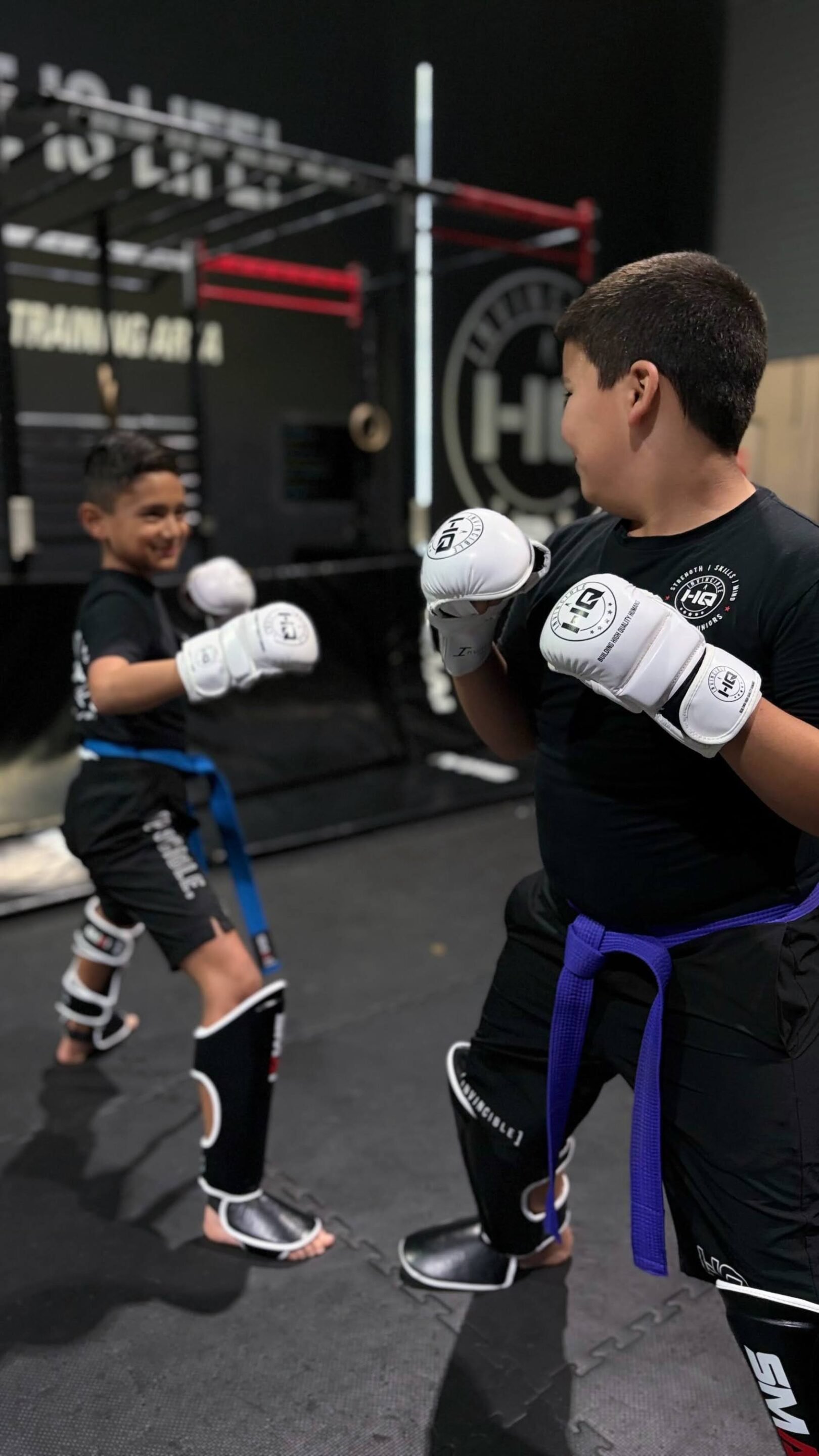
“I don’t want to go tonight.”
If your child does martial arts, you’ve probably heard some version of this on sparring night. The quiet resistance. The sudden stomach ache. The foot-dragging that starts about thirty minutes before class.
It’s tempting to let them skip it. Nobody wants to force their child into something that makes them anxious.
But here’s what parents on the other side of that decision will tell you: sparring night is the night that changes everything.
What Sparring Actually Teaches (And Why Drills Alone Aren’t Enough)
Pad work is important. Drills build technique. Combinations build memory and coordination. But all of those happen in a controlled, predictable environment. Your child knows what’s coming. They can prepare.
Sparring removes that safety net.
For the first time, your child faces another person who is moving, reacting, and responding in real time. There’s no set pattern. No predictable sequence. They have to think on their feet, literally.
This is where the real skills are forged. Not the kicks. The composure. The ability to stay calm when the pressure rises. The moment a child realises that uncomfortable doesn’t mean dangerous, and that they can handle more than they believed.
Kids sparring in martial arts builds a neural pathway that pad work simply cannot. It trains the nervous system to process pressure and respond with clarity instead of panic.
The Safety Question Every Parent Asks
This is the first concern, and it should be. Any martial arts program that puts children into sparring without structure, supervision, and careful matching is doing it wrong.
At Invincible HQ in Wetherill Park, Sydney, sparring for kids is never a free-for-all. Every round is supervised by accredited Invincible Coaches. Partners are matched by size, experience, and temperament. Coaches watch every exchange and intervene the moment intensity needs adjusting.
Your child is challenged. But they are never in danger.
The environment is deliberately designed to simulate pressure while maintaining complete safety. This is the principle that makes it work: enough difficulty to trigger growth, enough structure to prevent harm.
In Japanese martial arts philosophy, this deliberate exposure to difficulty is called shugyo. It’s not about making training painful. It’s about understanding that character is built in the moments we’d rather avoid.
What Happens After the Bell
The transformation parents notice most doesn’t happen during sparring. It happens after.
It’s the car ride home where your child won’t stop talking about the round they survived. It’s the following week when they walk in without the stomach ache. It’s the moment at school, three months later, when another child pushes them and they stay calm instead of crumbling or lashing out.
Parents at Invincible HQ describe this shift consistently. Juwana Haddad noticed a complete shift in her daughters’ mindset and confidence from the moment they started training. Matthew Ikin watched both his sons come out of their shells in ways he never expected. These changes didn’t come from easy sessions. They came from guided exposure to the exact thing that made their children uncomfortable.
The confidence that sparring builds is different from the confidence that comes from getting a gold star or winning a game. It’s earned confidence. The kind that comes from knowing, in your body, that you faced something hard and you stayed.
Why the Hard Nights Matter Most
Every parent has a version of the sparring-night dilemma. Your child resists. You wonder if pushing them is the right call.
Here’s what nearly two decades of coaching thousands of kids has taught us.
The children who develop the deepest confidence, the strongest character, and the most resilient mindset are the ones whose parents held the line on the hard nights. Not with force. With calm, steady encouragement. “I know it’s hard. You’re going. And I’ll be right here when you’re done.”
That moment of parental firmness teaches something no coach can. It says: I believe you can handle this, even when you don’t believe it yourself.
And every time they walk out of that session proud, that belief gets a little stronger. In them. And in you.
The resistance before class and the pride after it.. that gap is where character lives.
The Long Game
Sparring isn’t about fighting. It never has been.
It’s about raising a child who doesn’t freeze when the pressure comes. Who can manage their emotions in real time. Who knows, from lived experience, that hard things don’t break them.
The playground, the classroom, the job interview at 22, the difficult conversation at 30.. every one of those moments is a sparring round without gloves. The kids who’ve trained for it don’t just survive those moments. They’re composed in them.
At Invincible HQ in South West Sydney, our Invincible Juniors Program combines martial arts, gymnastics, and leadership training for kids aged 4 to 16. Sparring is one part of a holistic approach to building the whole child, physically, mentally, and socially.
If your child is resisting the hard nights, that’s not a sign to pull back. It’s a sign they’re exactly where they need to be.
Book a Discovery Session at Invincible HQ and see what your child is capable of when they’re coached through the hard stuff instead of sheltered from it. Visit invincibleworldwide.com or come to 1/30 Elizabeth St, Wetherill Park.